Large industrial construction projects rarely progress in a perfectly linear sequence. Equipment, foundations, site access, laydown yards, and construction activities all compete for space, and completion of one project activity can affect when another can begin.
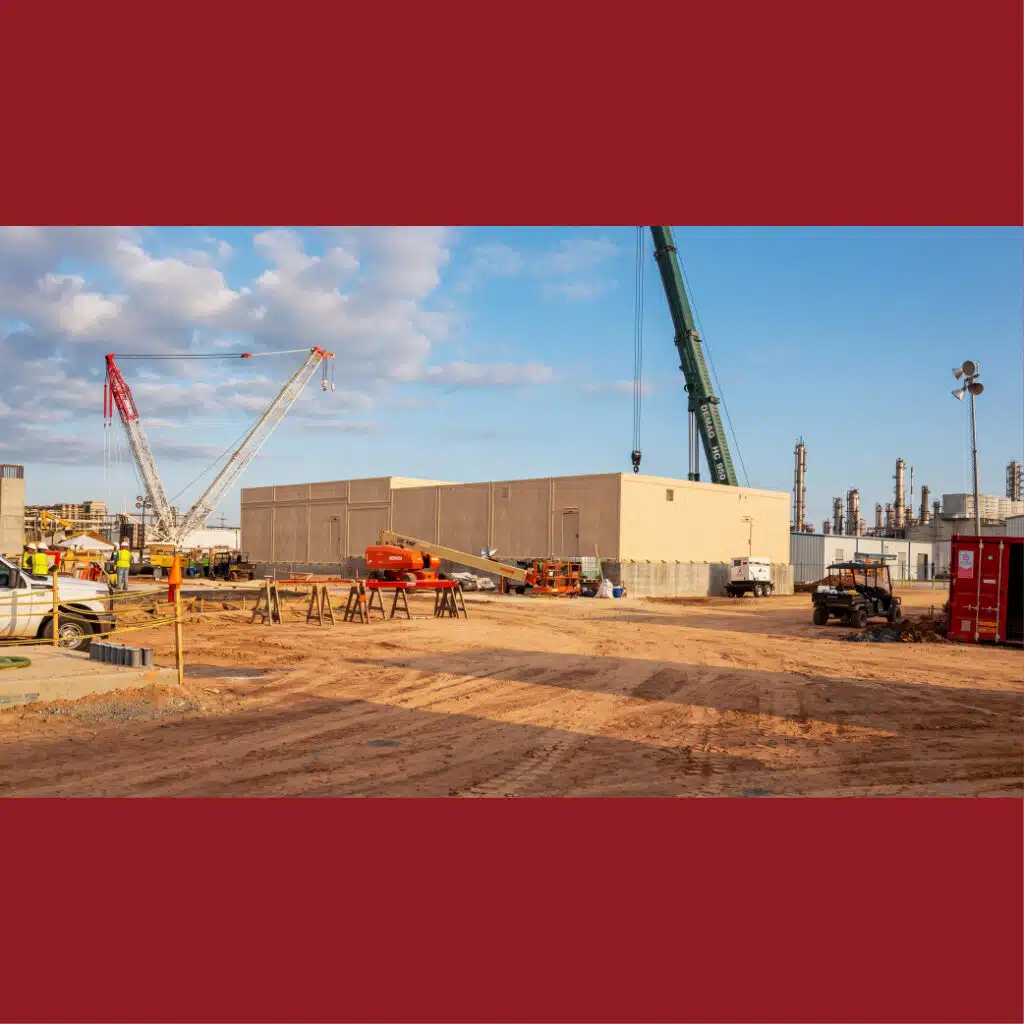
That was the challenge on a major U.S. refinery conversion from crude oil refining operations to renewable diesel, renewable gasoline, and sustainable aviation fuel. The project required a new operator building, but the location where that building would eventually sit had another important job first: it was the location of the construction project’s primary crane.
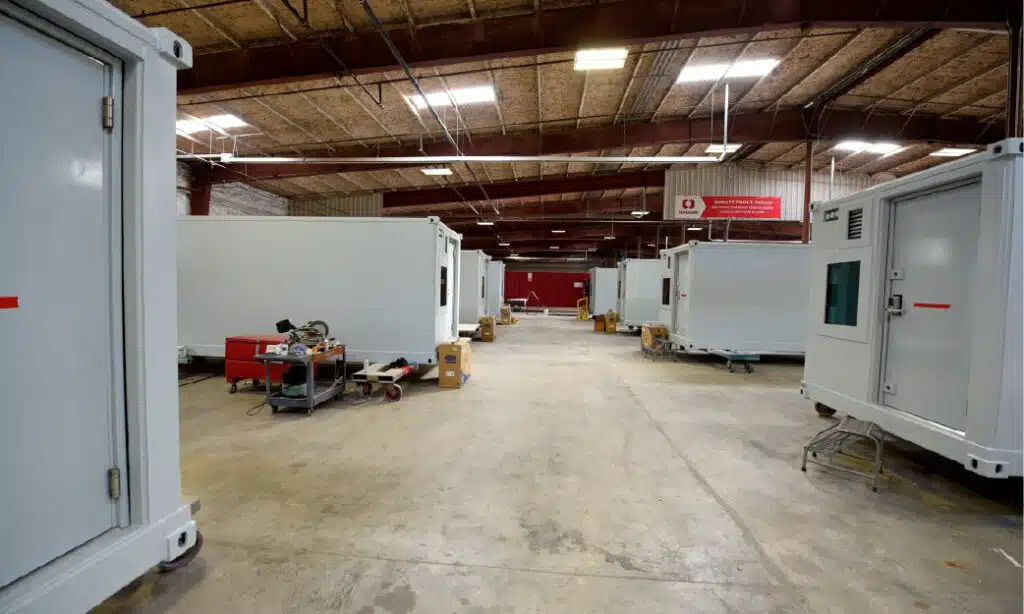
Instead, RedGuard manufactured the custom modular operator building off-site while construction continued at the facility. The building was fully assembled and powered up for customer inspection at the RedGuard Fabrication Center in Wichita, Kansas. Once the crane was no longer occupying the building’s planned location, the project could move forward with placing the completed modular structure.
The result illustrates one of the practical advantages of modular construction on complex industrial projects: building fabrication does not necessarily have to wait for the final building site to become available. It can happen in an ISO-9001 facility offsite under controlled conditions.
A Custom Operator Building for a Major Refinery Conversion
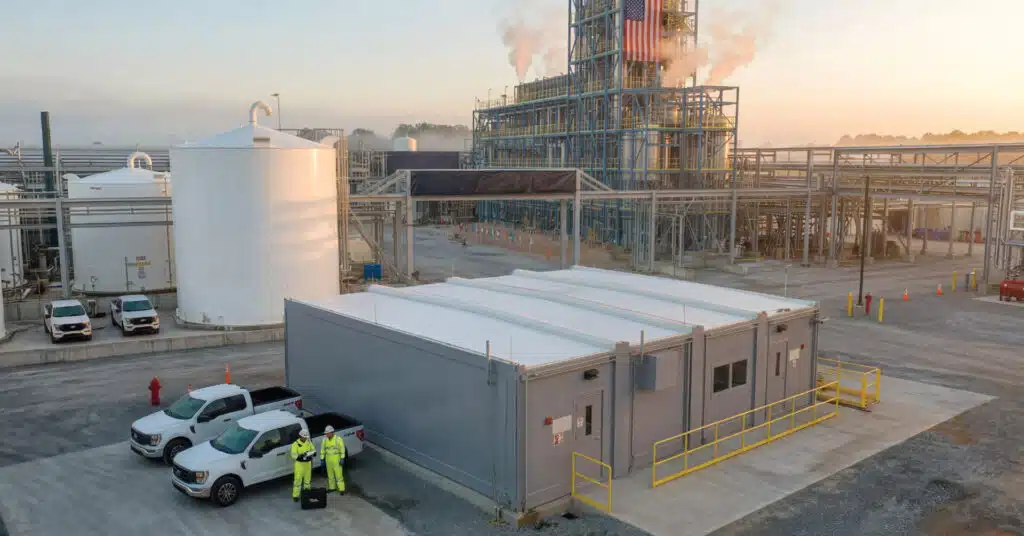
The project called for a 62-foot-by-40-foot operator building as part of a refinery conversion with capacity to produce 50,000 barrels per day of renewable diesel, renewable gasoline and sustainable aviation fuel.
The building itself was substantial. At approximately 2,480 square feet, it was designed to provide the occupied space for the plant operators responsible for producing the fuel. The building included workspace, a conference area, kitchen, lockers and restrooms. Unlike many RedGuard buildings used in hazardous industrial environments, this particular building was not blast-resistant. Its design reflected the requirements established for its application and location within this specific facility, as well as building codes and environmental design requirements, like wind and seismic considerations.
When the Building Site Isn’t Available
The unusual challenge on this project wasn’t designing and manufacturing the operator building. It was fitting that work into the construction sequence for the larger refinery conversion.
A large crane used during facility construction occupied the area where the operator building would be installed. The crane remained there until late in the project schedule, meaning the building site could not be used for conventional construction while the crane was still needed.
Waiting for the crane to leave before beginning construction of the operator building would have forced those activities to occur sequentially, adding months to the project. Modular construction provided another option. The two activities could progress in parallel instead of requiring the operator building to wait for its eventual footprint.
Moving Building Construction Off the Critical Site
Off-site fabrication changes where much of the building construction occurs. Instead of bringing the materials and trades needed to construct the building to an already active industrial site, RedGuard building specialists complete the work in its manufacturing facility in a controlled environment.
That approach can also reduce the amount of building-related construction activity taking place at the project site. Rather than bringing the trades involved in building construction through the facility gate throughout the process, that work takes place at the RedGuard Fabrication Center.
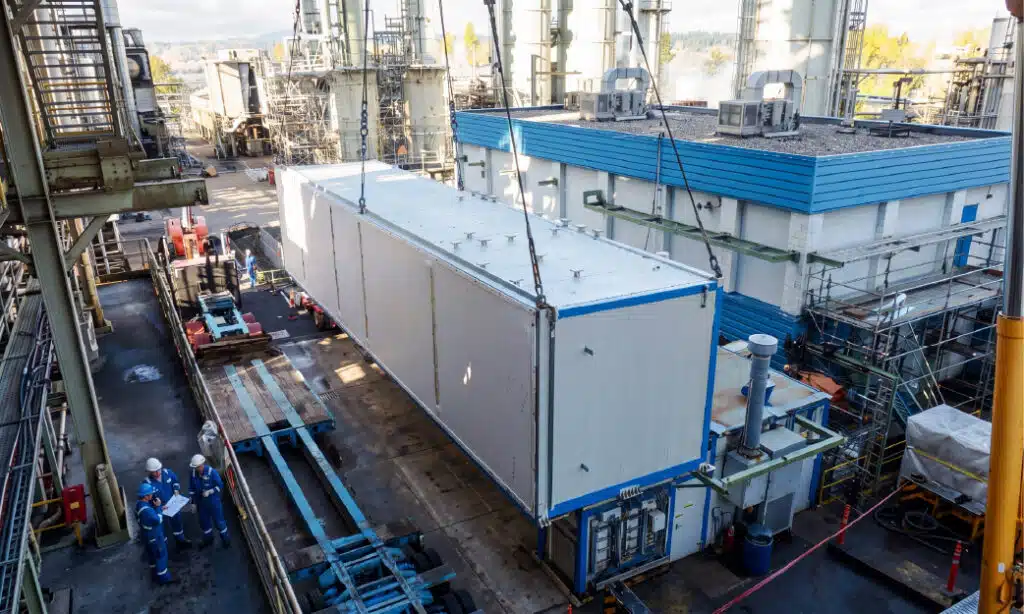
Like most RedGuard modular buildings, CP2500 arrived at the project site largely complete. Because it was a multi-section building, the installation process included joining the sections on site, along with the final electrical, plumbing and communications connections. The majority of the building construction had already taken place before the structure reached its final location.
Designing Around the Project, Not Just the Building
CP2500 also demonstrates why custom modular construction involves more than selecting a building from a standard configuration. The structure had to meet the operational requirements for an operator building while also fitting within the physical and scheduling constraints of a much larger industrial project.
In this case, the customer didn’t have a floor plan or building layout when RedGuard became involved. RedGuard developed the initial floor plan based on experience with previous projects, then worked with the customer through several changes to arrive at the final design.
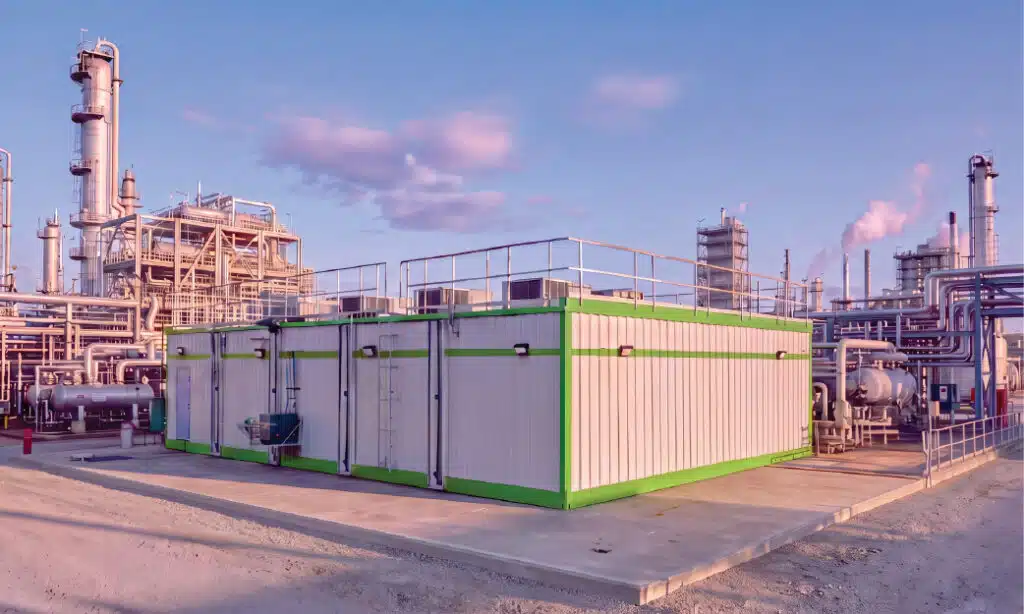
Those considerations affect decisions well beyond the building’s dimensions. Site conditions, occupancy, utilities, equipment, building features, transportation and installation can all influence the final design and how the structure is incorporated into the project. CP2500 included a number of built-in features, including lockers, restroom fixtures, desks and countertops, helping make the building ready for use once assembled and connected. RedGuard technicians also painted a green strip around the building to match the plant’s color scheme.
Planning for Modular Buildings Earlier in the Project
The CP2500 project demonstrates the value of considering modular construction from the beginning stages of a capital project, while the construction sequence is still being developed. Understanding where a building will be located, when that area will become available and what other construction activities will occur nearby can help determine how the building should be designed, manufactured, delivered and installed. Those conversations should begin well before the site is ready to receive the structure.
While RedGuard fabricated the building, work could continue to prepare the site. The foundation could be poured and building connections, including electrical, water, sewer, fire and alarm systems, could be brought to the foundation. Coordination between RedGuard and the customer was also important so the site, foundation and connections would be ready when the building shipped.
For renewable diesel projects, refinery conversions and other industrial construction, that early coordination can be especially valuable when work must take place around existing infrastructure, major equipment and multiple contractors.
CP2500 had a specific challenge around scheduling that off-site modular construction solved. Other projects will have different constraints. The advantage of a custom modular approach is the ability to develop the building—and its delivery strategy—around the realities of the project.
Discuss Your Project with RedGuard
Site constraints don’t have to become building constraints. Schedule a meeting with RedGuard to discuss your project, building requirements and construction schedule.